News banner
feed-image

Sustaining Economies and Natural Resources in a Changing World: Key Role of Land Grant Universities

SRS Program

The symposium held April 2-3 at the University of Florida drew 250 attendees and featured speakers from other academic institutions around the world, businesses, and agencies. The event helped to honor the 150th anniversary of the Morrill Act which helped to make higher education accessible to all in America. Please visit the event website for recorded presentations, program, poster abstracts, panel session notes, and photos.

The Florida Natural Resources Leadership Institute (NRLI) is now accepting applications for Class XIII

The Florida Natural Resources Leadership Institute (NRLI)

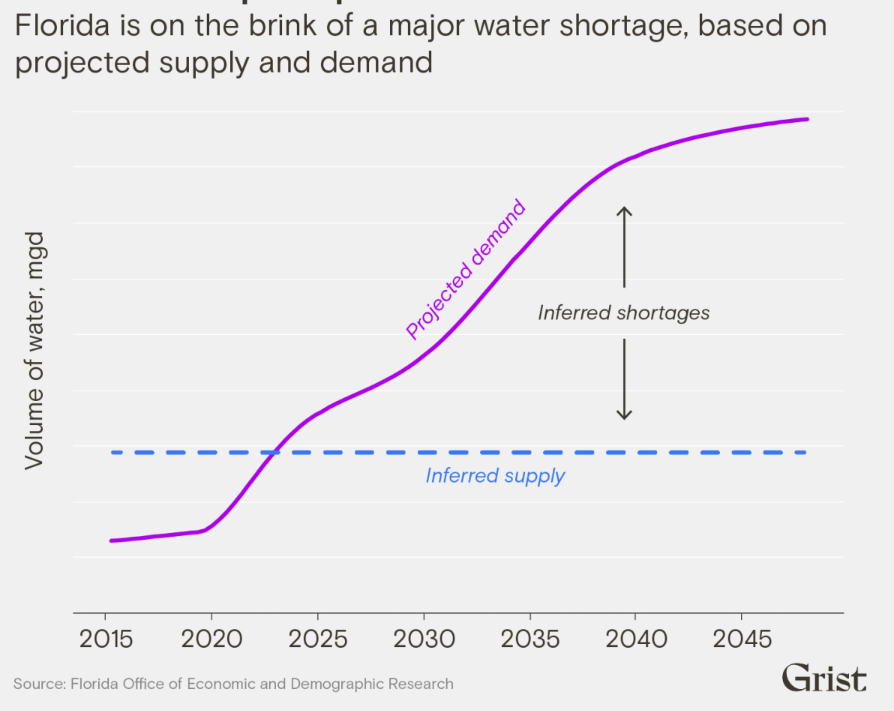
The Florida Natural Resources Leadership Institute (NRLI) is now accepting applications for Class XIII, which begins August 6, 2013 and continues through April , 2014. The 8 month fellowship will focus on "The Future of Water in Florida."

The program meets once per month at a different community in Florida to explore the natural resource topic and participate in discussions and activities with stakeholders in that community.

Institute graduates will be better able to help the people, industries, and institutions of Florida collaborate in achieving the often conflicting goals of protecting the environment and the people while fostering economic development. For more information and for the full schedule, please visit http://nrli.ifas.ufl.edu/.

UF/IFAS International Achievement Award: Clyde W. Fraisse, Associate Professor in Agricultural and Biological Engineering

Dr. Clyde Fraisse is recognized internationally as a leader in climate variability and change adaptation research and extension and in the development of climate-based decision support systems. The AgroClimate system developed by Dr. Fraisse for the southeastern U.S. is now an open source platform being replicated in Africa and Latin America. Educated in the U.S., Belgium, and Brazil, he is naturally comfortable in multiple cultures as he collaborates on research projects and co-publishes with international colleagues. Dr. Fraisse is a member of the World Meteorological Organization Expert Team on “User response to climate variability and change”. He is currently implementing an AgroClimate system for Cooperatives in Paraguay and was selected by the Government of Jordan to help develop synergetic approaches for complying with the Rio convention protocols. Dr. Fraisse is also collaborating with the World Bank in the development of climate smart tools for farmers in Kenya and Ethiopia and is the principal investigator for a project funded by the Department of Education and CAPES for the exchange of students between the University of Florida and universities in Brazil. His accomplishments have had a worldwide impact and greatly contributed to the internationalization of IFAS.

National Climate Assessment Report

The Florida Climate Institute, along with the Patel College of Global Sustainability, hosted the National Climate Assessment Southeast Town Hall Meeting in Tampa.

The event featured speakers from academic institutions, federal agencies, water utility and management, as well as authors of various chapters. These talks were streamed and can be viewed at (need link from UCAR).

The U.S. Global Change Research Program (USGCRP) released the National Climate Assessment (NCA) draft report last month to be reviewed by scientists and experts from inside and outside the federal government, the National Academy of Sciences, and the public. The report analyzes the effects of global changes on the natural environment, agriculture, energy production and use, land and water resources, transportation, human health and welfare, human social systems, and biological diversity; and analyzes current trends in global changes, both human-induced and natural, and projects major trends for the subsequent 25 to 100 years. The report includes a chapter on the southeastern USA and key messages for this region. More information about the National Climate Assessment can be found online at http://assessment.globalchange.gov.

Both the FCI and Southeast Climate Consortium (SECC) played major leadership and writing roles in this assessment for the southeastern states. Keith Ingram of UF (Director of the SECC) was the lead author on the SE technical report and Jim Jones (UF Director of the Florida Climate Institute) was co-lead author on the SE Assessment chapter in this report. At the meeting, a summary of the SE Assessment Report was presented.

All videos of the Southeast Regional Town Hall Meeting can be accessed directly from the YouTube Channel: http://www.youtube.com/NCAengagement.

FCI Expands to Better Serve Florida

We are pleased to announce that the Florida Climate Institute is expanding to increase the effectiveness of collaborations among universities and state and local agencies in Florida. The FCI will include Florida Atlantic University, the University of Central Florida, the University of Miami, and the University of South Florida (including the Patel School of Global Sustainability), in addition to the University of Florida and Florida State University. By bringing together even more outstanding scientists from across the state, we are able to increase both the breadth and the depth of our research and better inform Floridians about the economic and environmental opportunities and risks our state faces due to climate variability, climate change, and sea level rise.

Food Security Research Grows with AgMIP Teams

Dr. Jim Jones, FCI director at the University of Florida, is co-leading an international research initiative aimed at assessing climate impacts on regional and global food security now and in the future. Also part of this AgMIP (Agricultural Model Intercomparison and Improvement Project) team at UF are Ken Boote, Senthold Asseng, and Cheryl Porter. The project was featured in the August issue of Nature Climate Change and brings together experts who use computer models to understand how the world's major economic crops are vulnerable to changing climate. Within this program, a Modeling Group on Livestock and Grasslands was launched. The aim is to intercompare and further develop a range of models to be applied internationally, especially for climate change impact projections. Dr. Jim Jones’s team is part of the Grassland & Rangeland modeling sub-group. Activities and meetings are starting now; results will be discussed in the Fall 2013. For more information, download the press release.

Ice Volume and Sea Level During the Last Interglacial

GAINESVILLE, Fla. — A new study by a University of Florida researcher finds that sea level peaked between 18 and 30 feet above current sea level during the last interglacial period approximately 125,000 years ago.

That’s significant, the researchers say, because knowing how high sea level peaked previously tells us something about how the earth may respond as global temperatures rise again.

The finding differs from many studies on sea level during the previous warming period because the researchers use fossil coral reef data to estimate sea levels and then factor in the physics of how ever-changing ice sheets have affected those estimates. The range of sea level maximums that they estimate for the period suggests that part of the Greenland ice sheet had collapsed, as well as a large portion of the West Antarctic ice sheet and possibly sectors of the East Antarctic ice sheet.

View full article | View full citation

Seeping arctic methane could damage Florida coast

By Elizabeth Bettendorf, FSU News, 6/14/2012

The ancient reserves of methane gas seeping from the melting Arctic ice cap told Jeff Chanton and fellow researchers what they already knew: As the permafrost thaws, there is a release of methane, a powerful greenhouse gas that causes climate warming.

The trick was figuring out how much, said Chanton, the John W. Winchester Professor of Oceanography at Florida State University.

The four-member team — whose findings were published in the respected journal Nature Geoscience — documented a large number of gas seep sites in the Arctic where permafrost is thawing and glaciers receding (they found 77 previously undocumented seep sites, comprising 150,000 vents to the atmosphere). Until recently, the cryosphere (frozen soil and ice) has served to plug or block these vents. But thawing conditions have allowed the conduits to open, and deep geologic methane now escapes.

The team studied the link between natural gas seepage and the melting ice cap, using aerial photos and field data to figure out the number — and location — of seep holes.

So, here’s the rub: The more the ice cap melts, the more methane is released into the atmosphere — and the more the climate warms.

Why should this matter to you?

People who live in coastal areas of Florida could be directly affected, said Chanton, who analyzed the methane and dated it to more than 40,000 years old.

All this seeping methane causes more melting ice, Chanton said, which causes sea levels to rise and could affect coastal real estate values — sooner rather than later.

How soon?

Possibly over the next 50 to 100 years, Chanton said.

“Methane is a very strong greenhouse gas that’s grown three times faster than carbon dioxide since the industrial era,” Chanton said. “As the Arctic warms, the ice caps melt and the fissures open, so methane escapes and causes more warming.”

This phenomenon causes sea levels to rise, which is particularly problematic in Florida:

“Along the flat Florida coastline, a 1-foot rise in sea level could cause anywhere from 10 to 100 feet of shoreline retreat — erosion,” Chanton said. “For us here in Florida, this is really important because we can expect the coast to recede.”

That beach house, he warned, might be in peril: “It may not be there for your grandchildren.”

Source: http://news.fsu.edu/More-FSU-News/Study-Seeping-Arctic-methane-has-serious-implications-for-Florida-coastline

2012 Atlantic Hurricane Season Forecast

A team of FCI scientists at the Florida State University Center for Ocean-Atmospheric Prediction Studies (FSU COAPS) has just released the fourth annual FSU COAPS Atlantic hurricane season forecast. This year's forecast calls for a 70 percent probability of 10 to 16 named storms and 5 to 9 hurricanes. The mean forecast is for 13 named storms, 7 hurricanes, and an average accumulated cyclone energy (ACE; a measure of the strength and duration of storms) of 122. These numbers are based on 51 individual seasonal forecasts conducted since May 25, 2012 using sea surface temperatures predicted by NOAA.

The forecast mean numbers are slightly below the 1995-2010 average of 14 named storms and 8 hurricanes, and reflect the possible emergence of El Niño conditions in the tropical Pacific and cooling surface water temperatures in the tropical North Atlantic.

The scientists use a numerical atmospheric model developed at COAPS to understand seasonal predictability of hurricane activity. The model is one of only a handful of numerical models in the world being used to study seasonal hurricane activity and is different from the statistical methods used by other seasonal hurricane forecasters. FSU is the only university in the United States issuing a seasonal hurricane forecast using a global numerical atmospheric model. The model uses the high performance computers at FSU to make predictions of the atmosphere six months into the future. Based on these atmospheric predictions, tropical activity is objectively determined and forecasts are issued around June 1st.

The COAPS forecast is already gaining recognition for its accuracy only three years after its launch. The 2009 forecast predicted 8 named storms and 4 hurricanes, and there ended up being 9 named storms and 3 hurricanes that year. The 2010 forecast predicted 17 named storms and 10 hurricanes, and there were actually 19 named storms and 12 hurricanes. The 2011 forecast predicted an average of 17 named storms and 9 hurricanes, and there were actually 19 named storms and 7 hurricanes. Re-forecasts conducted using data since 1982 shows that the model has a mean absolute error of 1.9 hurricanes and 2.3 named storms. Details about past forecasts are archived here.

To learn more about this forecast, contact lead scientist Tim LaRow ( This email address is being protected from spambots. You need JavaScript enabled to view it. ; (850) 644-6926) and see the following article:

LaRow, T. E., L. Stefanova, D. W. Shin and S. Cocke, 2010: Seasonal Atlantic tropical cyclone hindcasting/forecasting using two sea surface temperature datasets. Geophys. Res. Lett., 37, L02804, doi:10.1029/2009GL041459.

Source: http://coaps.fsu.edu/hurricanes/

2012 Atlantic Hurricane Season Forecast
http://www.nhc.noaa.gov/gtwo_atl.shtml

New Stormview Storm Warning Simulation - Co-developed by FCI distinguished scholar seminar speaker Kenny Broad

New Stormview Storm Warning Simulation - Co-developed by FCI distinguished scholar seminar speaker Kenny Broad

During a recent Florida Climate Institute Distinguished Scholar Seminar, Dr. Kenny Broad, University of Miami, shared a new tool he developed with Dr. Robert Meyer of the University of Pennsylvania with funding from the National Science Foundation. The interactive simulation is designed to learn about how we make decisions while preparing for hurricanes and tropical storms. Stormview has participants view information about a storm forming in the distant Atlantic over time until the storm intensifies and decisions are needed. Days pass, various information sources are offered, choices for preparations are explored, and several scenarios for the storm’s impact are possible.

Go to https://cessna.wharton.upenn.edu/stormview to try it
Username and password: storm

See complete archived seminar here - April 19, 2012, Gainesville, FL: Cognitive Challenges to Using Climate Information.

Dr. Broad is the Director of the Leonard and Jane Abess Center for Ecosystem Science and Policy and a Professor in the Division of Marine Affairs and Policy at UM’s Rosenstiel School of Marine and Atmospheric Science. He also holds a joint appointment at Columbia University where he serves as Co-Director of the Center for Research on Environmental Decisions.

Dr. Meyer is the Gayfryd Steinberg Professor and Co-Director of Wharton's Risk Management and Decision Processes Center.

National Science Foundation

FCI Co-Director Eric Chassignet Receives FSU Distinguished Research Professor Award

FCI Co-Director Eric Chassignet Receives FSU Distinguished Research Professor Award

FSU's Distinguished Research Professor Award is the third highest faculty award at Florida State. Dr. Chassignet received the award at the Faculty Awards Ceremony April 9.

Droughts and Downpours: Harvesting Rain on a Dryland Farm

Grower Kirk Brock talks about adapting to rainfall extremes on his dryland farm in Florida and how seasonal climate forecasts should help him improve his operation.

To view the full video, visit the ClimateWatch Magazine.

FCI and CIAT sign Cooperative Agreement

The Florida Climate Institute and the International Center for Tropical Agriculture signed a Cooperative Agreement on Monday, April 16 that will help to strengthen decision making and policy analysis, capacity building and knowledge management, especially as these relate to climate change and tropical agriculture.

Pictured: Dr. Ruben Echeverria, Director General CIAT, Dr. David Sammons, Dean for International Programs, UF, and Jim Jones, Director of FCI, UF.

FCI and NCSU Collaborate on New Sea Level Rise Project

Incorporating Climate Change Effects into Next-Generation Coastal Inundation Decision Support Systems is an integrated and community-based approach that will develop the next generation Coastal Inundation Decision Support System (CIDSS), by incorporating the projected impact of climate change on hurricanes and SLR in the next 20-30 years and the next 80-100 years.

Read the project in its entirety

New White Papers on Climate Released

Four new White Papers were presented during the Florida Climate Change Task Force workshop - an event supported by the State University System of Florida

Climate Scenarios: A Florida-Centric View
Leader: Vasubandhu Misra
Contributors: Elwood Carlson, Robin K. Craig, David Enfield, Benjamin Kirtman, William Landing, Sang-Ki Lee, David Letson, Frank Marks, Jayantha Obeysekera, Mark Powell, Sang-lk Shin

Florida Water Management and Adaptation in the Face of Climate Change
Leaders: Marguerite Koch-Rose, Diana Mitsova-Boneva, and Tara Root
Contributors: Leonard Berry, Frederick Bloetscher, Nicole Hernández Hammer, Jorge Restrepo, Ramesh Teegavarapu

Florida Climate Change Education and Training: SUS Cooperative Plan
Leader: Sebastian Galindo-Gonzalez
Contributors: Leonard Berry, Carolyn Cox, Alana Edwards, Robert Ellingson, Allan Feldman, Tracy A. Irani, James W. Jones, Julie Lambert, Christine Lockhart, Mantha Mehallis, Jeffrey G. Ryan

Florida Biodiversity under a Changing Climate
Leaders: Susan E. Cameron-Devittt, Jennifer R. Seavey
Contributors: Sieara Claytor, Tom Hoctor, Martin Main, Odemari Mbuya, Reed Noss, Corrie Rainyn

Click here for climate education opportunities in the State University System of Florida.

UF projects received NOAA sea level rise planning grants

Research on global systems suggests that coastal communities and regions are becoming increasingly vulnerable to sea level rise and climate change. As a result, researchers and practitioners are developing processes, tools, and strategies for adapting to future impacts. Building on existing and previous UF research, three sea level rise adaptation planning projects "Development of Sea Level Rise Adaptation Planning Procedures and Tools Using NOAA Sea Level Rise Impacts Viewer", "A Spatial-Temporal Econometric Model to Estimate Costs and Benefits of Sea Level Rise Adaptation Strategies", "Rural Coastal Region Adaptation Planning for Sea Level Rise" led by DCP faculty, Zhong-Ren Peng, Kathryn Frank and Dawn Jourda recently received funding from the National Oceanic and Atmospheric Administration (NOAA) through the Florida and Mississippi-Alabama Sea Grant programs.

FSU Project received NSF grant to work on Equatorial Pacific, Indian and Atlantic ocean interannual flow

FCI Member and FSU Professor Allan Clarke, with Assistant Scientist Lucia Bunge received a NSF grant to work on a new project "Understanding Observed Equatorial Pacific, Indian and Atlantic Ocean Interannual Flow Using Theory and High Resolution ECCO2 Model Results". Fundamental to an understanding of El Niño/Southern Oscillation climate fluctuations is an understanding of the anomalous equatorial Pacific surface flows which move the surface waters and change the sea surface temperature. Through the advent of accurate satellite altimeter measurements from late 1992 to the present, they now have an unprecedented opportunity to examine these flows not just in the Pacific, but also in the Indian and Atlantic Oceans. The main goal of this project will be to describe the anomalous equatorial surface flows in all three ocean basins and understand major aspects of them using theory and the dynamically consistent high resolution ECCO2 global numerical model. The scientific community is beginning to take advantage of the ECCO2 global ocean model, and a secondary benefit of the analysis will be the evaluation of the accuracy of this model and its dynamics near the equator in all three ocean basins. The foundational knowledge gained during this project should be helpful to the many scientists who will analyze future long records of equatorial climate data gathered in the multinational Atlantic Ocean PIRATA and Indian Ocean RAMA observational programs.

Project receives sea level rise planning grant

The University of Florida and the Guana Tolomato Matanzas National Estuarine Research Reserve (GTM NERR) have received a highly competitive NERRS Science Collaborative Grant to pilot a sea level rise adaptation planning process in the Matanzas Basin near St. Augustine. The project team will work with stakeholders and coastal decision makers to deliver a habitat vulnerability assessment for the basin and to identify opportunities for protecting coastal to inland ecological connectivity. The methodologies will be carefully designed and evaluated to ensure robustness and transferability to other NERR System sites and coastal areas. The interdisciplinary project team includes several UF faculty members: Kathryn Frank, principal investigator and assistant professor of urban and regional planning, Dawn Jourdan, assistant professor of urban and regional planning, Paul Zwick, associate dean and professor of urban and regional planning, Tom Hoctor, director of the Center for Landscape Conservation Planning, Bob Grist, associate professor of landscape architecture, Greg Kiker, associate professor of agricultural and biological engineering, and Thomas Ruppert, coastal planning specialist, Florida Sea Grant. The three-year project, funded at $618,377, kicked off in December.

Regional Downscaling for the Southeast United States

Researchers throughout Florida have been expressing a need for high-resolution regional climate and climate projection datasets for quite a while. I am delighted to introduce to you our new arrival: the COAPS Regional Downscaling for the Southeast United States. We are providing hourly model output (surface temperature, precipitation and much more) at a 10km resolution, for two categories of simulations:

  1. downscaling of Global Reanalyses (sub-project CLARReS10) for the period 1979-2000, and
  2. downscaling of three Global Climate Models (sub-project CLAREnCE10) for the periods 1968-2000 and 2038-2070.

This is a uniquely detailed and comprehensive dataset that, we hope, would be useful as the climate driver to a range of hydrological and ecological modeling studies. The downscaling procedure has been successfully validated in a peer-reviewed publication. We invite you to visit the CLARReS10/CLAREnCE10 datasets here.

Let This email address is being protected from spambots. You need JavaScript enabled to view it. know what you think!

FCI Member Professor Allan Clarke awarded Gold Medal

The American Meteorological Society has awarded Professor Allan J. Clarke, Department of Earth, Ocean and Atmospheric Science, Florida State University, the 2012 Sverdrup Gold Medal Award for fundamental contributions to the dynamics of ocean currents and air-sea interactions with particular emphasis on the El Niño-Southern Oscillation.

FCI Director elected to National Academy of Engineering

James W. Jones, FCI Director, was elected to the National Academy of Engineering for his contributions to understanding climate change, environmental impacts, and sustainable agricultural systems.

The National Academy of Engineering (NAE) has elected 66 new members and 10 foreign associates, announced NAE President Charles M. Vest on Thursday, February 9, 2012. This brings the total U.S. membership to 2,254 and the number of foreign associates to 206.

Election to the NAE is among the highest professional distinctions accorded to an engineer. Academy membership honors those who have made outstanding contributions to "engineering research, practice, or education, including, where appropriate, significant contributions to the engineering literature," and to the "pioneering of new and developing fields of technology, making major advancements in traditional fields of engineering, or developing/implementing innovative approaches to engineering education."

Two Day Event Draws Experts From State and Nation

  • FCI 2011 Event
  • FCI 2011 Event
  • FCI 2011 Event
  • FCI 2011 Event
  • FCI 2011 Event
  • FCI 2011 Event
On November 14 and 15, scientists, agencies, and industry gathered at the University of Florida to discuss climate issues. 

The two day event began with the Florida Climate Institute Annual Event (click here for event program) on Monday which offered attendees diverse presentations about various climate scenarios for Florida and the impacts on the environment and economy. Many also participated in a communications workshop to better bridge the gap between science, policy, and citizenry. The evening keynotes, Steve Seibert and Virginia Burkett, presented  an interesting balance of social responsibility and climate science. 

On Tuesday, November 15, The State University System of Florida Climate Change Task Force Event (click here for event program) featured Jayantha Obeysekera with a keynote that led to panel discussions with leaders from around the state and country about climate impacts.

Over the 2 days, there were 17 presentations, 175 attendees, and 64 posters contributing the success of the events.

Thanks to all who participated!